
Preschool Child Care Program
Your child has many years ahead in traditional school settings, so there's no need to rush early learning into a classroom environment. In my preschool child care program, children learn through play in a nurturing, home-like setting that supports natural development and curiosity.
The Best Preschool Learning is Play-Based
Preschoolers are naturally curious and learn best through hands-on experiences, relationships, and exploration. In a play-based setting, children build skills through meaningful activities that reflect their interests, rather than through early academic pressure or formal instruction.
Research continues to support play-based learning as an effective approach for young children. The National Association for the Education of Young Children describes play as central to children's development and learning, emphasizing children's choice, curiosity, and active engagement in meaningful experiences.
Preschool Program Highlights
- Positive relationships with a caring, experienced caregiver.
- A thoughtfully prepared environment that encourages creativity and exploration.
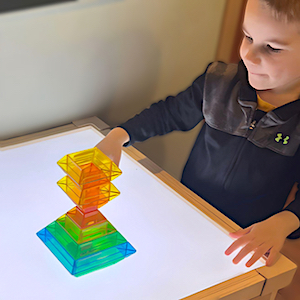
- Materials that support hands-on investigation and discovery.
- A play-based curriculum that supports school readiness and individual growth.
- Learning experiences based on each child’s interests and strengths.
- Individual learning goals across all developmental domains.
- A flexible daily routine that responds to children’s needs.
- Family-style meals that support independence and social skills.
- Opportunities to build confidence through problem-solving and decision-making.
- Clear, consistent child guidance strategies.
- Ongoing support and communication for families.
Preschool Development
Children grow and change quickly between the ages of three and five, moving from toddlerhood toward kindergarten readiness. These years are filled with rapid development across all areas.
During infancy, children learn to trust their caregivers, and as toddlers, they begin to seek independence. Preschoolers build on that foundation as they explore more independently, form relationships, and make sense of the world around them.
Younger Preschool Children
Younger preschool children are developing a growing understanding of themselves and others. They are learning to interact with peers, express emotions, build early friendships, and navigate social situations.
Play invitations at this stage support social and emotional development while also building decision-making and self-help skills. Children continue to grow across all developmental domains through hands-on, meaningful experiences. This is also a time when many children show interest in toilet learning, and I work with families to support this milestone when the time is right.
Older Preschool Children
Older preschoolers continue to strengthen their social, emotional, and self-help skills while developing greater independence and self-control.
Play experiences continue to follow children’s interests while also supporting early math, science, and literacy development. Children practice important skills such as taking turns, listening and following directions, managing outerwear independently, and resolving conflicts as they prepare for the transition to kindergarten.
Free 4K Preschool Option
Many families in Appleton, WI, begin exploring 4K (four-year-old kindergarten) as part of preschool planning. While school-based programs are one option, children can also participate in a free 4K preschool experience at Amy & Kids Co. through the Get Kids Ready program.
At Amy & Kids Co., school readiness develops through play-based learning, social interaction, and everyday experiences. Eligible 4-year-old children can participate in GKR while remaining part of our playschool setting. Learn more on our free 4K page.
Developmental Milestones for Preschoolers
Stay Connected
The Daily Connect mobile app keeps you connected to your child throughout the day. Receive real-time photos and videos, plus updates on meals, naps, and activities. At the end of the day, you’ll also receive a summary of your child’s experiences.
Playful Learning
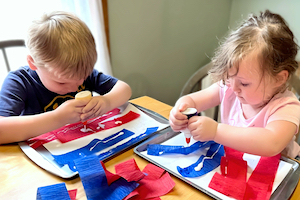
Play is an important part of children's learning and development, and play-based learning can be more effective for early learners than direct instruction.