
Play-Based Learning
Play-based learning is widely recognized as a developmentally appropriate way for young children to learn. Through play, children build essential life skills that carry into school, relationships, and adulthood. Our play-based child care curriculum reflects this approach, with learning growing from hands-on experiences and children’s natural curiosity.
What is Play-Based Learning?
Play-based learning is an approach where children learn through active exploration, relationships, and hands-on experiences rather than direct instruction alone. In early childhood settings, it shows up as children building, pretending, experimenting, and making sense of the world in ways that feel natural to them.
The Early Years Learning Framework of Australia describes play-based learning as "a context for learning through which children organise (sic) and make sense of their social worlds, as they engage actively with people, objects and representations."
Through these everyday experiences, children practice problem-solving, build relationships, and test out new ideas as they explore their environment. Over time, these experiences naturally grow in complexity as children’s thinking and play develop.
Play-Based Learning is Powerful
Play is an important part of early childhood development because it gives children space to explore ideas, try things out, solve problems, and learn from their experiences. Through play, children build confidence, curiosity, and flexible thinking.
Play-Based Learning Environments
Environments that support play-based learning may look different from traditional classroom settings. Instead of quiet, structured work periods, children are actively engaged in play that is often busy, social, and hands-on.
Educators plan for learning by setting up engaging environments and offering extended periods of uninterrupted play. Children choose activities based on their interests and move freely between experiences as their play develops. Learning happens naturally as children interact with materials, ideas, and each other.
Play-Based Learning Centers
Learning centers are where much of the learning naturally unfolds during the day. Time spent in these areas helps children build independence, practice decision-making, and develop longer attention spans through meaningful play.
Carefully prepared environments support a wide range of skills and allow children to explore concepts at their own pace. The educator’s role is to observe, support, and extend learning when appropriate based on children’s interests and discoveries.
Here are some examples of what children explore in different areas, along with simple ways families can extend learning at home.
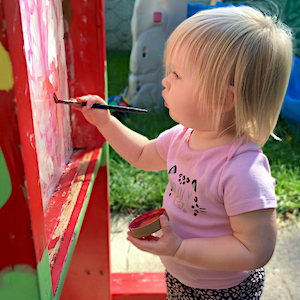
Art Experiences
- Make choices and explore materials freely
- Observe cause and effect through different mediums
- Express feelings, ideas, and imagination
- Engage in the creative process without a focus on a “right” outcome
- Use symbols and drawings to represent ideas
- Practice fine motor skills with tools like paint, scissors, and glue
At home: Offer simple materials like paper, crayons, markers, and recyclable items for cutting and gluing. Children are often more focused on the process than the finished product. Open-ended questions like “Tell me about your picture” support their thinking.
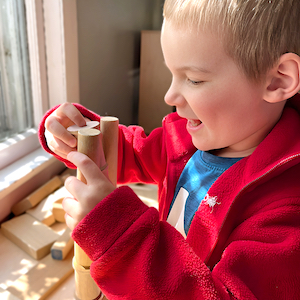
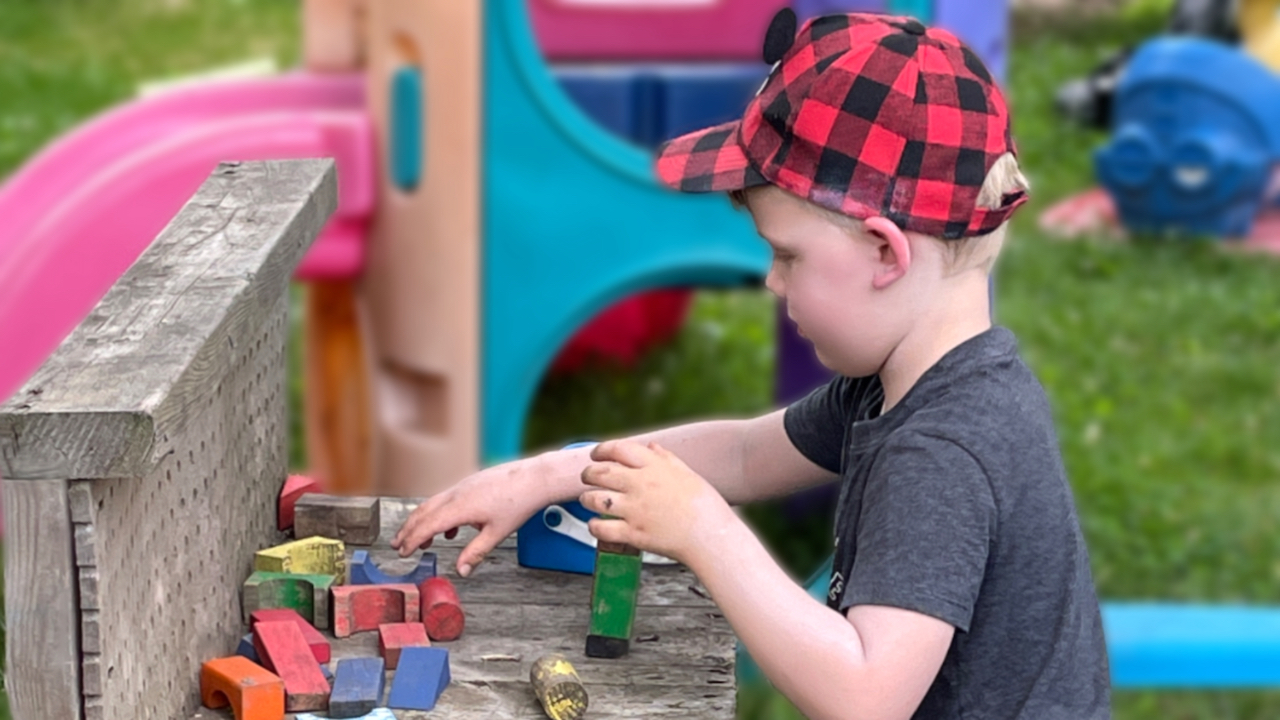
Learning with Blocks
- Practice sharing and collaborative play
- Explore early math concepts like size, shape, height, and balance
- Discover science ideas such as weight, stability, and gravity
- Use imagination to build and design from ideas
- Develop problem-solving skills through construction challenges
- Strengthen coordination and spatial awareness
At home: Blocks don’t need to be expensive. Duplos, cardboard boxes, or homemade materials can offer similar learning opportunities through open-ended building and exploration.
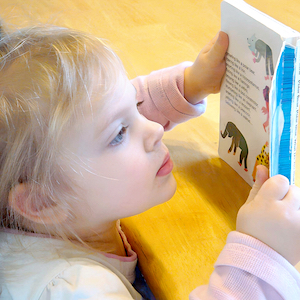
Children’s Books
- Build foundations for early literacy development
- Support language and vocabulary growth
- Help children understand symbols and meaning
- Explore the difference between real and imaginary stories
- Encourage prediction and recall skills
- Support imagination and storytelling
At home: Reading together regularly helps children build familiarity with language and stories. Keeping books accessible and revisiting favorites supports early literacy in a natural way.
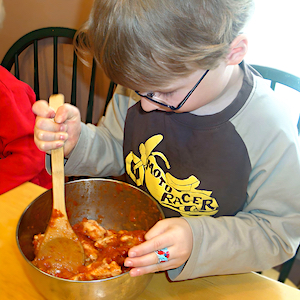
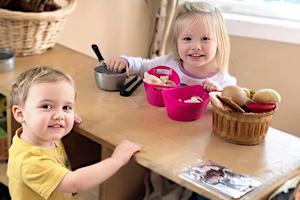
Learning with Cooking
- Learn about basic nutrition and food preparation
- Develop hand-eye coordination
- Practice following simple steps and directions
- Engage multiple senses during hands-on experiences
- Build early problem-solving skills
- Explore basic science concepts like mixing and change
At home: Invite children into simple kitchen tasks such as stirring, pouring, or adding toppings. These shared experiences support independence and confidence in everyday routines.
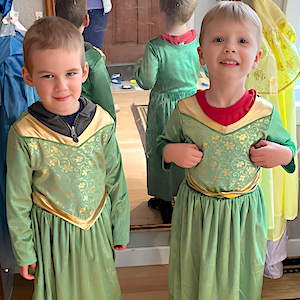
Dramatic Play
- Explore roles such as family members, helpers, or animals
- Use imagination to create stories and scenarios
- Practice cooperation and shared decision-making
- Develop self-regulation and emotional expression
- Build communication and social skills
- Process experiences through pretend play
At home: Simple props like scarves, hats, or empty boxes can support imaginative play. Children often create elaborate play scenarios from everyday household items.
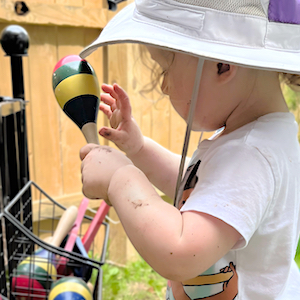
Music and Movement
- Develop coordination and body awareness
- Support self-expression through movement and sound
- Build early language and rhythm awareness
- Explore different types of music and styles
- Strengthen balance and gross motor skills
- Encourage confidence and participation
At home: Listening to a variety of music and moving together helps children explore rhythm and expression. Simple homemade instruments can also add to the experience.
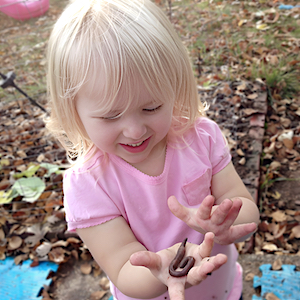
Playing Outdoors
- Build physical strength, coordination, and endurance
- Explore the natural world through hands-on experiences
- Take safe, developmentally appropriate risks
- Strengthen focus and attention
- Engage in early science and math exploration
- Support overall well-being through active play
At home: Unstructured outdoor time supports exploration and movement. Simple tools like balls, chalk, or bubbles encourage active play in everyday spaces.
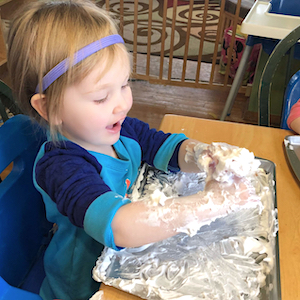
Sensory Activities
- Engage the sense of touch, sight, sound, smell, and taste
- Support early math skills like sorting and measurement
- Build focus and attention over time
- Reinforce color and shape recognition
- Introduce early science concepts like cause and effect
- Strengthen fine motor development
At home: Everyday materials like play dough, water, rice, or kitchen items can support sensory exploration. These experiences naturally happen throughout daily routines as well.
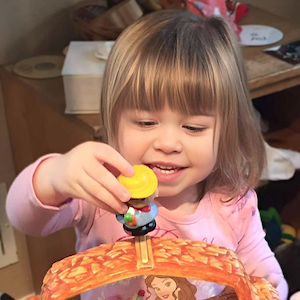
Toys, Games, Puzzles, etc.
- Strengthen coordination and problem-solving skills
- Practice sharing, cooperation, and turn-taking
- Explore through hands-on interaction
- Develop early sorting, matching, and pattern skills
- Learn about size, shape, and spatial relationships
- Build patience and persistence
At home: A variety of age-appropriate toys and puzzles support development through play. Shared game time with adults also supports social and language growth.
Curriculum
Our play-based curriculum supports developmentally appropriate learning while reflecting the unique strengths of a home-style learning environment.