Child Care Curriculum

Our child care curriculum is The Creative Curriculum® for Family Child Care. The Creative Curriculum® is aligned with the Wisconsin Model Early Learning Standards, which address all the domains of a child's learning and development from birth to first grade, and corresponds with the Wisconsin Model Academic Standards.

A Play-Based Child Care Curriculum

Child Care Curriculum - Girls ReadingThe Creative Curriculum® for Family Child Care is a play-based program that emphasizes a responsive relationship between provider and child, and centers around a child care environment planned to promote children's learning. Although some of our daily activities are teacher-directed, the majority of children's development occurs during play.

Play is extremely important to children's learning because it is through play that children learn and grow. Children who are allowed large block of time for play have time to pretend, imitate, experiment, explore, problem-solve, cooperate, and work on relationships.

From about six months to six years children engage in "functional play," during which they explore the functions and properties of objects in their environment. Using their senses they learn how things look, sound, feel, taste, smell, and what they do. Children who are encouraged to freely explore and discover are moved by curiosity to learn more.

The Environment as Child Care Curriculum

The child care environment plays an important role in children's learning. The Creative Curriculum® program is based on a child care environment that is safe yet stimulating, and promotes functional play through carefully planned learning centers that interest children and invite their explorations.

Learning Centers are the heart of the Creative Curriculum®. A learning center is typically an area that provides children with activities and materials that are related by subject, purpose, or skill. When children play in learning centers they develop independence, practice decision making, and experience involvement in an activity. In addition, play in learning centers reinforces skills and concepts, and allows for individual learning goals to be met.

Child Care Curriculum Learning Centers

Each of the following learning centers plays an important role in our child care curriculum. Click on a learning center to discover what your child learns as he/she plays in each area:
Child Care Curriculum

Art Experiences in the Child Care Curriculum

Child Care Curriculum - ArtThrough art experiences your child:

  • Observes cause and effect.
  • Expresses his/her feelings and imagination.
  • Enjoys the creative process.
  • Learns how to use art materials like paint, scissors, and glue.

At home: Provide simple art materials like paper, crayons, markers, magazines to cut, and glue. Understand that your child will be much more interested in the creative process he/she is going though than the finished product. Be sure to say "Tell me about..." instead of "What is it?"

Blocks in the Child Care Curriculum

Child Care Curriculum - BlocksWhen building with blocks your child:

  • Learns to share and play with others.
  • Explores the pre-math concepts of size, shape, weight, balance, height and depth.
  • Uses his imagination to make something from his mind's eye.
  • Solves construction problems.

At home: Blocks don't need to be expensive to foster learning. At home you can provide Duplos, alphabet blocks, or homemade blocks of milk cartons and newspaper to provide as rich a learning experience as pricey hardwood blocks.

Children's Books in the Child Care Curriculum

Child Care Curriculum - BooksBy spending time with books your child:

  • Lays the foundation for future learning success.
  • Expands his/her vocabulary.
  • Understands symbols as they relate to real-life objects.
  • Predicts and applying previous knowledge.

At home: Help your child become a reader by surrounding him/her with books and reading together every day. Becoming a good reader is one of the most important skills in becoming a successful learner

Cooking in the Child Care Curriculum

Child Care Curriculum - CookingCooking helps your child:

  • Learns about nutrition.
  • Practices following directions.
  • Use all five senses: sight, smell, hearing, touch, and taste.
  • Strengthens problem-solving skills.
  • Discovers science concepts, like the properties of matter.

At home: Encourage children's interest in cooking by allowing them to help in the kitchen. Young children can tear lettuce for a salad or slice bananas with a plastic knife.

Dramatic Play in the Child Care Curriculum

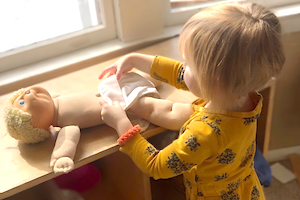
Child Care Curriculum - Dramatic PlayWhen playing in the housekeeping area your child:

  • Explores the roles of mother, father, children, and pets.
  • Actively uses his/her imagination.
  • Practices cooperating with other children.
  • Sorts objects into categories.
  • Learns about him/herself and others.

At home: Play "make believe" with your child at home; have a tea party in the bathtub or play "mail man" with junk mail. Take advantage of opportunities to foster your child's creativity.

Music and Movement in the Child Care Curriculum

Child Care Curriculum - MusicWhen your child sings, dances or listens to music she:

  • Develops self-awareness and greater muscle control.
  • Increases her self-esteem.
  • Expresses herself and her ideas creatively.
  • Enriches vocabulary with new words.
  • Learns to appreciate different types of music.

At home: Encourage music development by listening to live and recorded music from different cultures, time periods and in different styles.

Outdoor Learning in a Child Care Curriculum

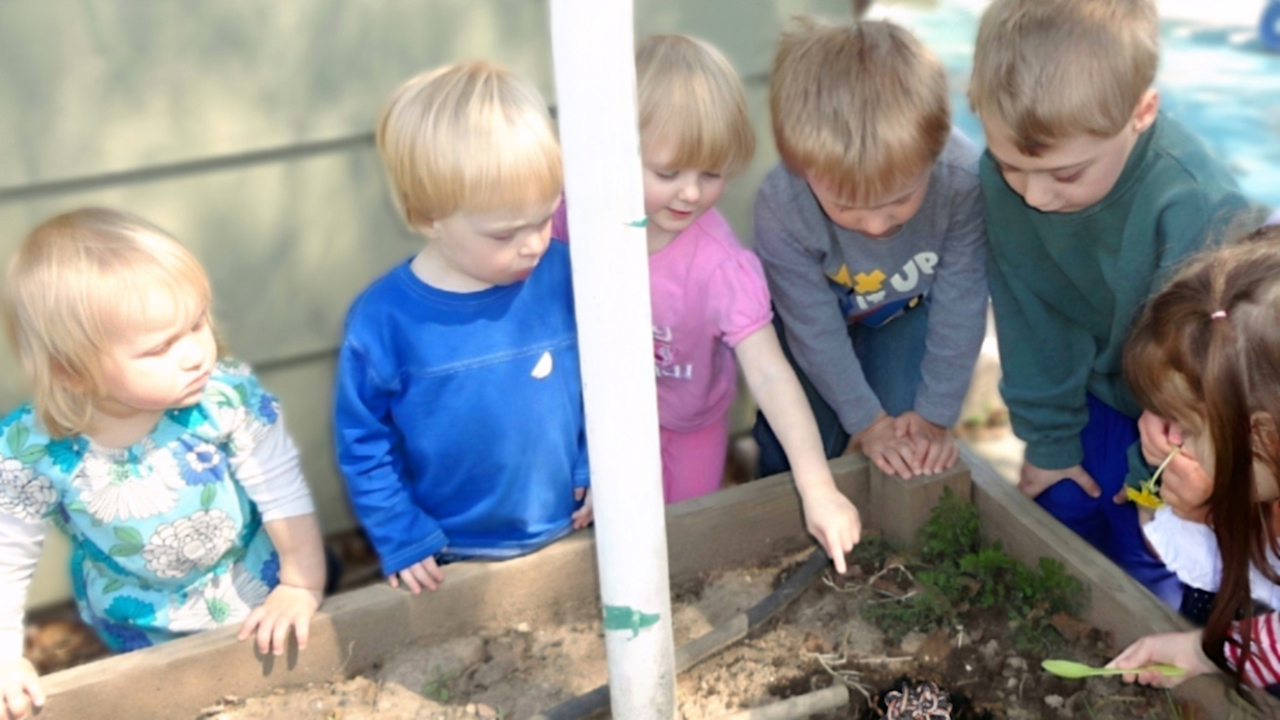
Child Care Curriculum - OutdoorsWhen your child plays outdoors, he/she:

  • Learns how to use his/her body effectively.
  • Develops his creatively.
  • Develops his/her knowledge of the natural world using real objects.
  • Practices mathematical and scientific thinking skills.
  • Lowers stress levels and strengthens his/her immune system.

At home: Go on a "listening" walk with your child. Point out the sounds of birds, passing cars, whistling wind, even your footsteps and discuss which are loud and which are soft, which are high and which are low, and what are their favorite sounds.

Sensory Activities in the Child Care Curriculum

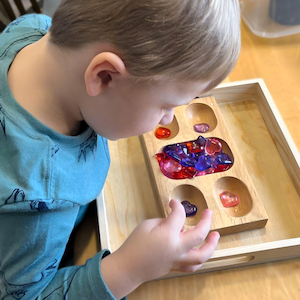
Child Care Curriculum - SensoryWhile playing in the sensory table your child:

  • Is soothed through his/her sense of touch.
  • Learns about size, measurement, and other early math skills .
  • Increases concentration and attention on a task.
  • Reinforces color and shape recognition.
  • Experiences science concepts like cause and effect.

At home: Encourage children's interest in cooking by allowing them to help in the kitchen. Young children can tear lettuce for a salad or slice bananas with a plastic knife.

Toys, Games and Puzzles in the Child Care Curriculum

Child Care Curriculum - ToysWhen your child plays games, puts together puzzles, or plays with toys, he/she:

  • Improves his/her eye-hand coordination.
  • Practices sharing and taking turns.
  • Uses his/her senses to explore.
  • Develops classifying, sorting, predicting, and problem solving skills.
  • Learns about shapes, sizes, weights, and textures.

At home: Spend time playing with your child; putting together puzzles, playing games and sorting their pieces, and asking questions to extend your child's thinking.

More Information About Play and the Child Care Curriculum

We're convinced that play is the most important component of an effective child care curriculum. But don't take our word for it; check out these expert articles too:


Amy & Kids Co. Family Child Care - 1013 W. Oklahoma, Appleton, WI, 54914 - 920-738-1698
Design by Snowfyre, modified by A. Nogar of Amy & Kids Co. Family Child Care
Copyright ©2011. All rights reserved.